

Selling Your Home Quickly While Spending Less
- Details
- Written by Mitch Wixom Mitch Wixom
- Category: For Sellers For Sellers
- Published: 16 April 2019 16 April 2019
- Hits: 9173 9173

Whether due to personal reasons or situations beyond your control, there are times when you need to sell your house quickly and move on. However, this can be extremely difficult, particularly if your house is older or in poor condition. The good news is that there are a number of relatively simple home improvement projects you can undertake that will help you make your home more attractive to buyers. Here are some of the most effective projects in order of cost.
Where do Buyers find Their New Home?
- Details
- Written by Don Wixom Don Wixom
- Category: For Sellers For Sellers
- Published: 01 December 2017 01 December 2017
- Hits: 12237 12237
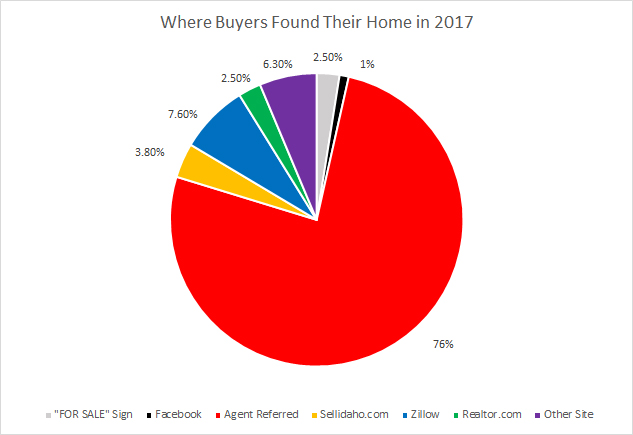
With the digital age in full swing, many people believe that most buyers can search for and find their new home all on their own. However, based on an independent study, licensed Realtors are still the #1 source for buyers! Take a look at the chart below to see where buyers are finding their new homes.
"FOR SALE BY OWNER"
- Details
- Written by Don Wixom Don Wixom
- Category: For Sellers For Sellers
- Published: 10 January 2017 10 January 2017
- Hits: 19202 19202

The amount of homes with that "For Sale By Owner" (aka FSBO) sign in the front lawn seldom seems to decrease. We're here to let you know why doing what may seem like saving money, is actually costing you.
Easy Ways to Make Your Home More Appealing
- Details
- Written by Don Wixom Don Wixom
- Category: For Sellers For Sellers
- Published: 17 November 2016 17 November 2016
- Hits: 15361 15361

Sometimes people are hesitant to put their home on the market because they don't want to use the time and money they think it will require to be "show ready."
In reality, there are a few small things that can be replaced/repaired to give the home a huge boost in appeal!
Staging Your Home
- Details
- Written by Don Wixom Don Wixom
- Category: For Sellers For Sellers
- Published: 15 November 2016 15 November 2016
- Hits: 16061 16061
See how to stage your home on your own to give that extra appeal to buyers!
Creating Curb Appeal
- Details
- Written by Guest Author Guest Author
- Category: For Sellers For Sellers
- Published: 06 March 2007 06 March 2007
- Hits: 28464 28464
When selling a home the first impression is critical. Many home buyers eliminate homes quickly if the initial visual impression is not impressive. For this reason, it is important to enhance the curb appeal of your home prior to listing it for sale. Keep in mind that potential buyers will see your home differently than you do. If it has an unappealing or unorganized visage, that will reflect poorly on the rest of the home. It really does not matter how beautiful and warm the interior of the home is, if the outside is not enough to draw the buyers in for a closer look. So how to go about improving the curb appeal of your home?
Contracts in Real Estate
- Details
- Written by Guest Author Guest Author
- Category: For Sellers For Sellers
- Published: 06 March 2007 06 March 2007
- Hits: 24219 24219
The contracts that are involved in a real estate transaction can be a complicated thing to the untrained eye. Typically a real estate contract encompasses all aspects of the sale and purchase of a particular property. This includes all subjects and sub-clauses, details of the property and the funding that is involved. It's advisable to read over these documents in entirety with your realtor who can explain all aspects of the contract in greater detail.
Should I take my Home off the Market During The Holidays?
- Details
- Category: For Sellers For Sellers
- Published: 05 November 2006 05 November 2006
- Hits: 24059 24059
Many sellers think about takeing their home off the market during the holidays. This may be the best time of year to find a serious, qualified buyer who may be in town visiting family for the holidays. This article spells out some good advice for sellers during this time of year. When you are thinking of buying a home, think of Idaho Real Estate! Call Don Wixom for quality service throughout the year!
Read more: Should I take my Home off the Market During The Holidays?
Insist on a Home Inspection
- Details
- Category: For Sellers For Sellers
- Published: 05 September 2006 05 September 2006
- Hits: 34220 34220
As a seller, the home inspection report protects you because it establishes the actual condition of the property at the time of sale.
A home inspection usually covers the following:
Considering Offers
- Details
- Category: For Sellers For Sellers
- Published: 05 September 2006 05 September 2006
- Hits: 23397 23397
When considering an offer, keep in mind that you are out to get the best price AND the best terms for you. If you focus solely on the price, you may overlook terms that could be favorable to you as a seller.
You should have a strategy for dealing with each offer. Here are some situations that can effect your decision about an offer:
The Talking House
- Details
- Category: For Sellers For Sellers
- Published: 04 September 2006 04 September 2006
- Hits: 23888 23888
Get Talking House Working For You...and Get Results Fast!